Tarot Card Library
Tarot Card Meanings with Images, Upright and Reversed
A complete guide to the 78 Rider-Waite-Smith Tarot cards, including card images, card names, upright meanings, and reversed meanings.
Author: Fortuneteller.Today Editorial Team
Editorial review: SEO Launch Ops Review
Fact-checked: 2026-08-30
Update reason: This page was expanded into a source-backed bilingual guide with concrete examples, FAQs, internal tool links, and responsible-use boundaries.
What Tarot is: a symbolic framework, not a certainty machine
A modern Tarot deck normally has 78 cards: 22 Major Arcana and 56 Minor Arcana. It is most useful for separating a question into themes, resources, emotions, and actions. A card cannot replace medical diagnosis, legal advice, financial advice, or a safety plan. Treat a reading as a hypothesis with observable next steps and a review date. This keeps the reflective value of symbolism without presenting a random draw as an unchangeable prediction.
The 78-card structure: stages and everyday conditions
The Major Arcana, from The Fool through The World, can frame learning, transition, and value-level themes; it does not prove that an event must occur. The Minor Arcana has four suits: Wands for initiative and drive, Cups for feelings and relationships, Swords for thought and communication, and Pentacles for resources and embodied reality. Each suit includes Ace through Ten plus Page, Knight, Queen, and King. Practice numbers as a progression from start to outcome, and ask whether a court card is a person, a behavior, or a skill to develop.
Upright and reversed cards: read the expression of energy
A reversal is not automatically the opposite of the upright card. It may show blockage, inward processing, excess, delay, or recalibration. The Eight of Swords upright can describe a felt restriction; reversed, it may show recognizing an exit or continuing to avoid an uncomfortable fact. Decide before drawing whether reversals are in scope and keep the same rule throughout a reading. Beginners can use upright cards only; consistency and notes matter more than a complicated system.
A repeatable reading workflow
First rewrite the question with a person, an action, and a time window: “How can I prepare for interviews in the next 30 days?” is more useful than “Will I succeed?” Choose a spread that matches complexity: one card for a daily prompt, three cards for situation–obstacle–action, and a relationship spread when both people and their interaction need separate positions. Describe the image and position before adding keywords, then combine the cards into one provisional sentence. Record one low-risk action and one observable metric, and review the result instead of drawing repeatedly for reassurance.
Example: turn “Will I be hired?” into a plan
Suppose a job seeker asks, “What can increase my chance of an offer in the next 30 days?” and draws Three of Pentacles, Two of Swords, and Knight of Wands. Three of Pentacles points to portfolio quality, collaboration, and expert feedback. Two of Swords highlights an unresolved choice or missing information. Knight of Wands supplies active verbs: apply, rehearse, iterate quickly. A grounded synthesis is to obtain peer review, choose between two role directions, and run a one-week application and mock-interview sprint. The cards suggest a testable plan; they do not promise an outcome.
Limits and common mistakes
Typical errors include memorizing keywords without reading the position, drawing again until a preferred answer appears, treating a court card as proof of a named person, or presenting Death and The Tower as literal disasters. Do not use Tarot as the sole basis for medical, debt, legal, investment, or personal-safety decisions. Do not treat a reading about another person as surveillance or evidence. Use non-deterministic language with minors and sensitive topics, and direct urgent situations to qualified professional help.
Practice plan and on-site tools
Build a 14-day notebook. Spend four days sampling five cards from each suit and writing a noun, a verb, and a concrete example. Spend the next four days on three-card readings labelled background, obstacle, and action. Add reversals for three days and compare blockage, internalization, and excess. Use the final days to compare notes with real events and remove claims that cannot be observed. After checking a single card, open the site’s Tarot reading tool for a fixed spread. When comparing systems, use the Lenormand library for event clues and keep its combination grammar separate from Tarot’s narrative approach.
Evidence notes, ethics, and review
A useful Tarot journal separates four layers: what the image literally shows, what the traditional keyword suggests, what the questioner reports, and what action will be tested. Write the date, spread positions, deck edition, whether cards were reversed, and the exact wording of the question. Avoid editing the record after an outcome is known; hindsight makes a vague statement appear more accurate than it was. At review time, label each statement as observed, partly observed, not observed, or not testable. “I felt more confident after rehearsing” is an observable process result, while “the universe guaranteed an offer” is not. When reading for someone else, ask permission before discussing sensitive topics, let them reject an interpretation, and never pressure them to buy another reading. A clear boundary also improves SEO trust: explain which claims are historical description, which are interpretive tradition, and which are personal reflection. Link readers to the deck source and the on-site tool so they can verify the card set and repeat the exercise themselves. This transparent method makes the article useful to beginners and experienced readers alike. Keep a short glossary for terms such as arcana, suit, spread, significator, and reversal, because shared definitions reduce confusion when readers compare decks or discuss a reading with a teacher.
Tarot Card Meanings with Images, Upright and Reversed
A complete guide to the 78 Rider-Waite-Smith Tarot cards, including card images, card names, upright meanings, and reversed meanings.
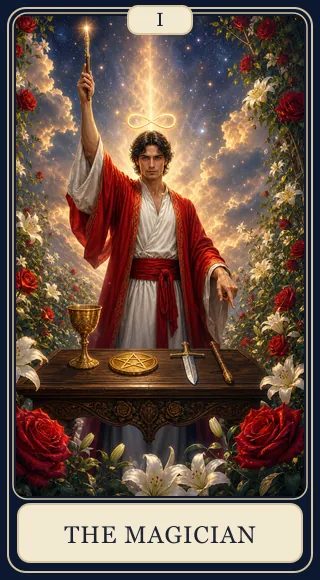
The Magician
Skill, diplomacy, address, subtlety; sickness, pain, loss, disaster, snares of enemies; self-confidence, will; the Querent, if male.
Physician, Magus, mental disease, disgrace, disquiet.
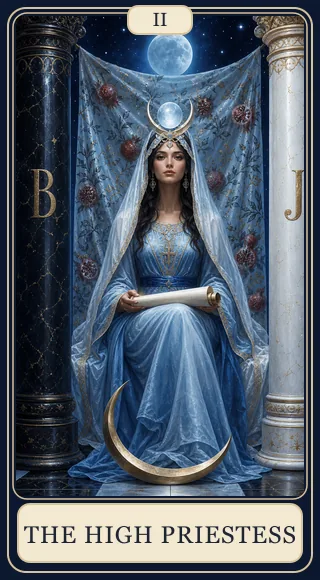
The High Priestess
Secrets, mystery, the future as yet unrevealed; the woman who interests the Querent, if male; the Querent herself, if female; silence, tenacity; mystery, wisdom, science.
Passion, moral or physical ardour, conceit, surface knowledge.
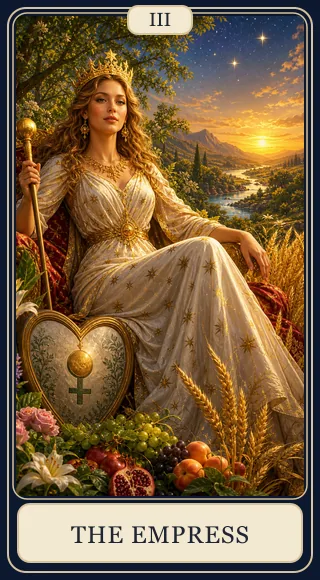
The Empress
Fruitfulness, action, initiative, length of days; the unknown, clandestine; also difficulty, doubt, ignorance.
Light, truth, the unravelling of involved matters, public rejoicings; according to another reading, vacillation.
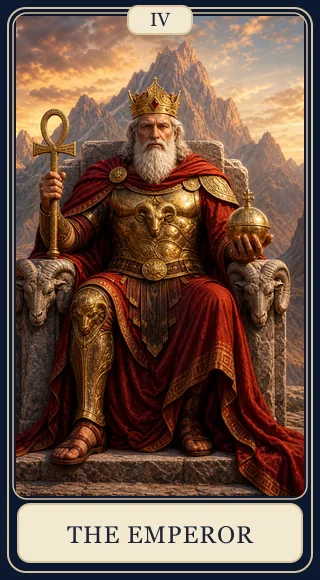
The Emperor
Stability, power, protection, realization; a great person; aid, reason, conviction; also authority and will.
Benevolence, compassion, credit; also confusion to enemies, obstruction, immaturity.
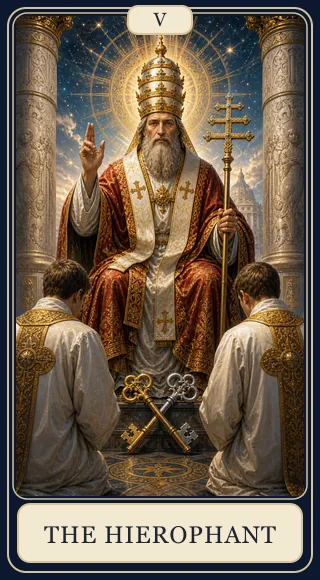
The Hierophant
Marriage, alliance, captivity, servitude; by another account, mercy and goodness; inspiration; the man to whom the Querent has recourse.
Society, good understanding, concord, overkindness, weakness.
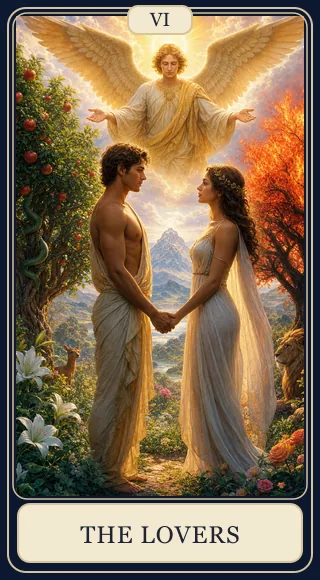
The Lovers
Attraction, love, beauty, trials overcome.
Failure, foolish designs. Another account speaks of marriage frustrated and contrarieties of all kinds.
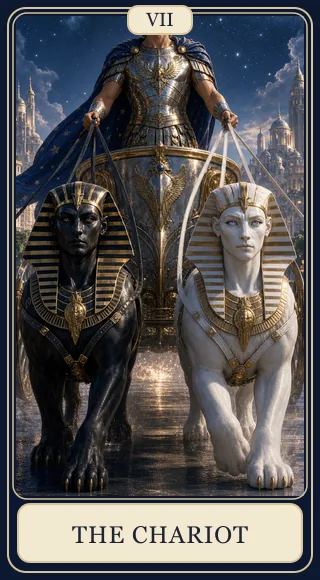
The Chariot
Succour, providence also war, triumph, presumption, vengeance, trouble.
Riot, quarrel, dispute, litigation, defeat.
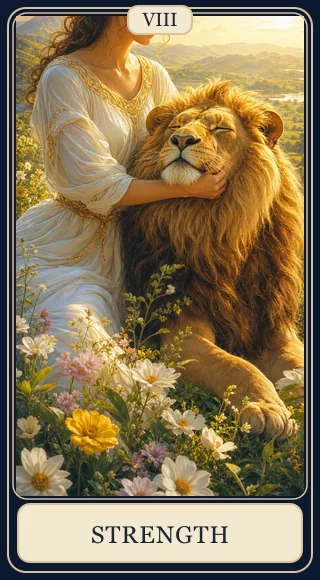
Fortitude
Power, energy, action, courage, magnanimity; also complete success and honours.
Despotism, abuse if power, weakness, discord, sometimes even disgrace.
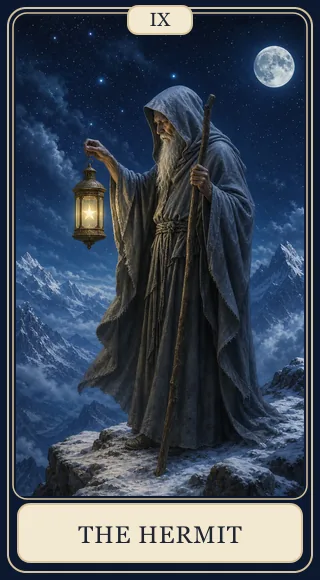
The Hermit
Prudence, circumspection; also and especially treason, dissimulation, roguery, corruption.
Concealment, disguise, policy, fear, unreasoned caution.
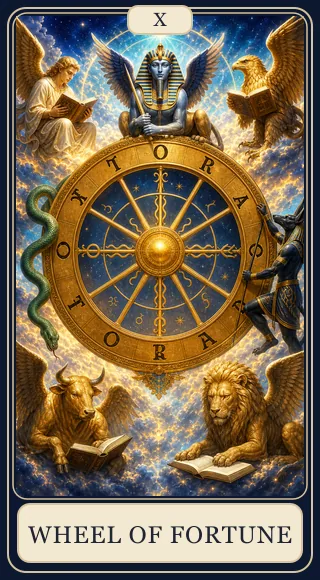
Wheel Of Fortune
Destiny, fortune, success, elevation, luck, felicity.
Increase, abundance, superfluity.
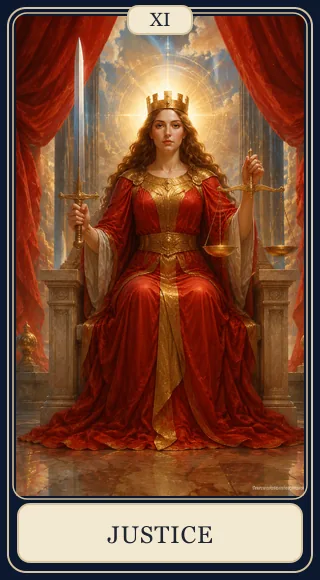
Justice
Equity, rightness, probity, executive; triumph of the deserving side in law.
Law in all its departments, legal complications, bigotry, bias, excessive severity.
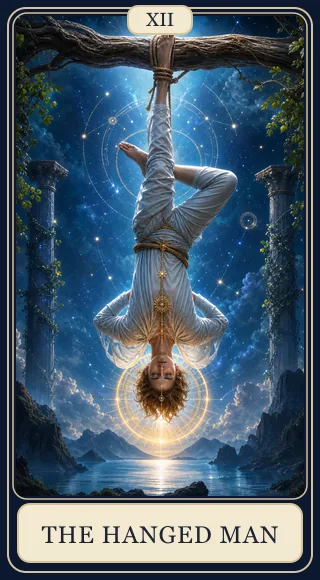
The Hanged Man
Wisdom, circumspection, discernment, trials, sacrifice, intuition, divination, prophecy.
Selfishness, the crowd, body politic.
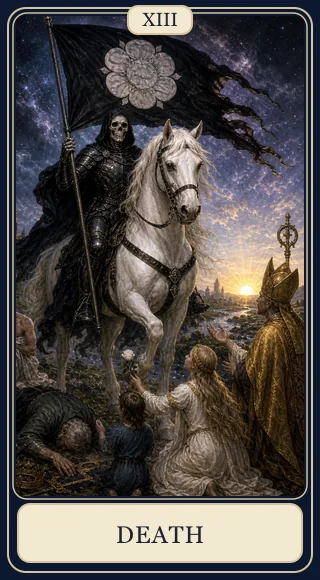
Death
End, mortality, destruction, corruption also, for a man, the loss of a benefactor for a woman, many contrarieties; for a maid, failure of marriage projects.
Inertia, sleep, lethargy, petrifaction, somnambulism; hope destroyed.
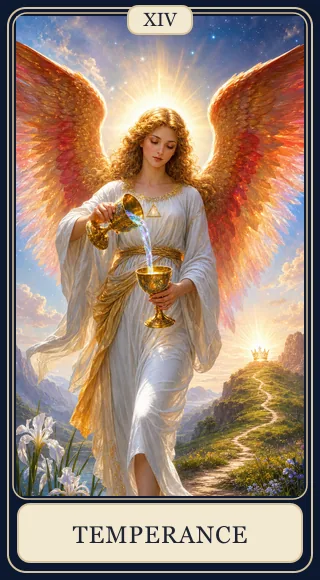
Temperance
Economy, moderation, frugality, management, accommodation.
Things connected with churches, religions, sects, the priesthood, sometimes even the priest who will marry the Querent; also disunion, unfortunate combinations, competing interests.
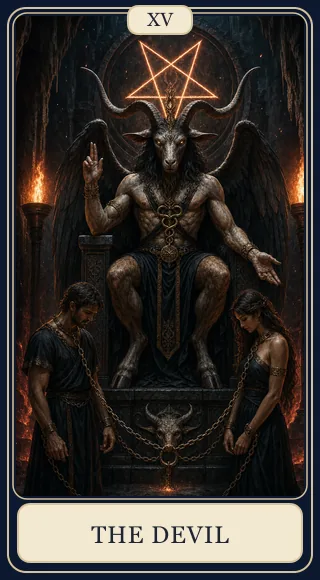
The Devil
Ravage, violence, vehemence, extraordinary efforts, force, fatality; that which is predestined but is not for this reason evil.
Evil fatality, weakness, pettiness, blindness.
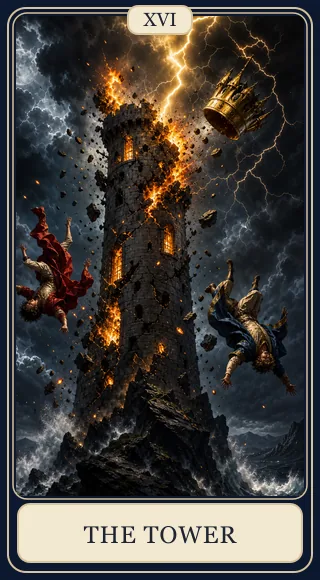
The Tower
Misery, distress, indigence, adversity, calamity, disgrace, deception, ruin. It is a card in particular of unforeseen catastrophe.
According to one account, the same in a lesser degree also oppression, imprisonment, tyranny.
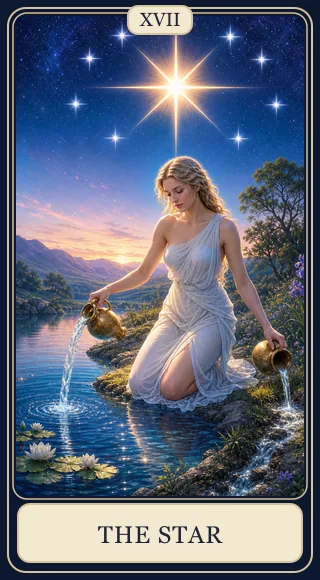
The Star
Loss, theft, privation, abandonment; another reading says-hope and bright prospects,
Arrogance, haughtiness, impotence.
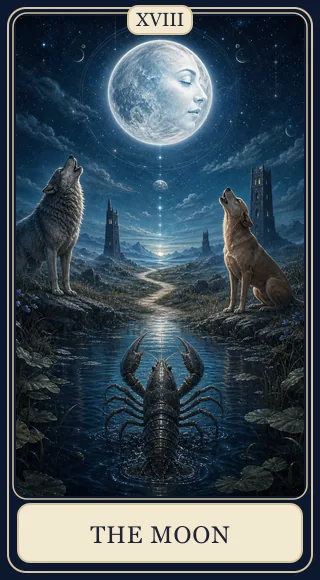
The Moon
Hidden enemies, danger, calumny, darkness, terror, deception, occult forces, error.
Instability, inconstancy, silence, lesser degrees of deception and error.
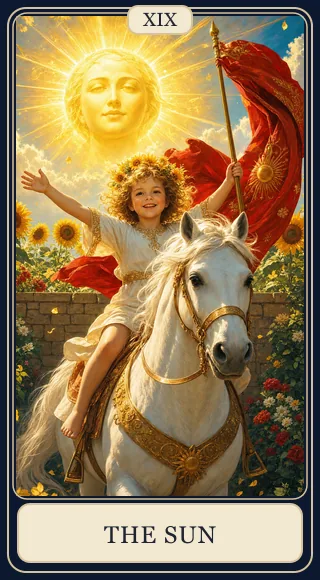
The Sun
Material happiness, fortunate marriage, contentment.
The same in a lesser sense.
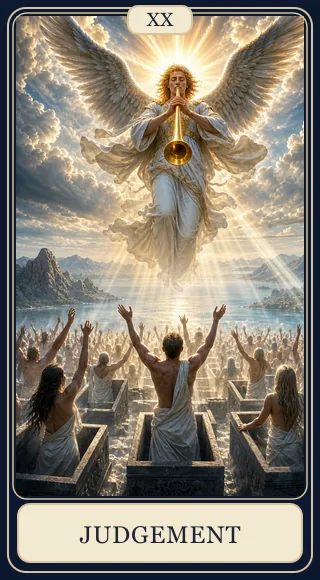
The Last Judgment
Change of position, renewal, outcome. Another account specifies total loss though lawsuit.
Weakness, pusillanimity, simplicity; also deliberation, decision, sentence.
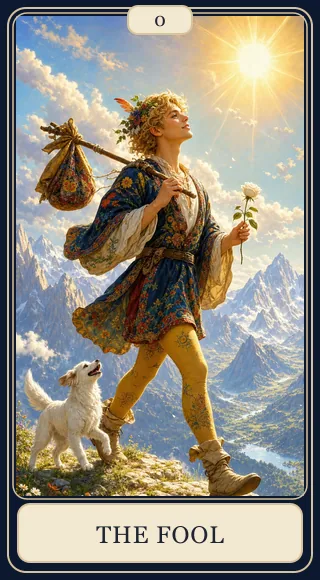
The Fool
Folly, mania, extravagance, intoxication, delirium, frenzy, bewrayment.
Negligence, absence, distribution, carelessness, apathy, nullity, vanity.
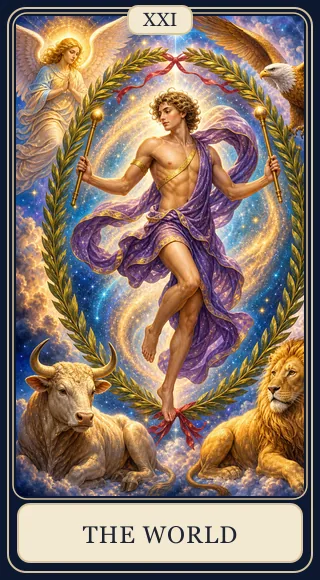
The World
Assured success, recompense, voyage, route, emigration, flight, change of place.
Inertia, fixity, stagnation, permanence.
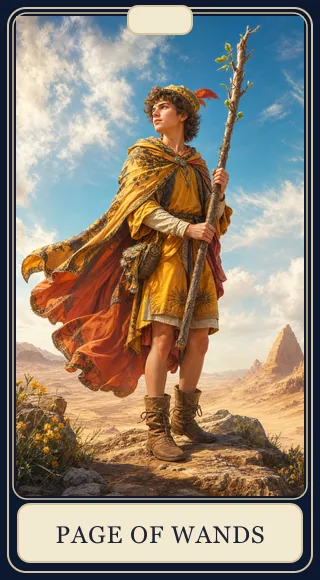
Page of Wands
Dark young man, faithful, a lover, an envoy, a postman. Beside a man, he will bear favourable testimony concerning him. A dangerous rival, if followed by the Page of Cups. Has the chief qualities of his suit. He may signify family intelligence.
Anecdotes, announcements, evil news. Also indecision and the instability which accompanies it.
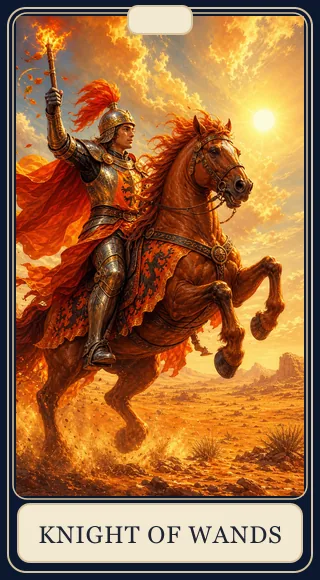
Knight of Wands
Departure, absence, flight, emigration. A dark young man, friendly. Change of residence.
Rupture, division, interruption, discord.
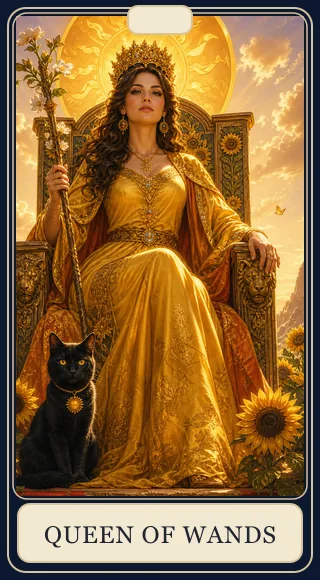
Queen of Wands
A dark woman, countrywoman, friendly, chaste, loving, honourable. If the card beside her signifies a man, she is well disposed towards him; if a woman, she is interested in the Querent. Also, love of money, or a certain success in business.
Good, economical, obliging, serviceable. Signifies also--but in certain positions and in the neighbourhood of other cards tending in such directions--opposition, jealousy, even deceit and infidelity.
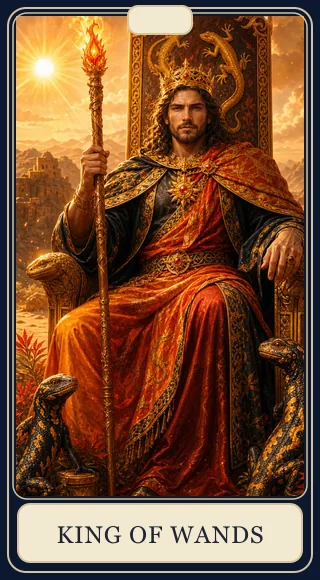
King of Wands
Dark man, friendly, countryman, generally married, honest and conscientious. The card always signifies honesty, and may mean news concerning an unexpected heritage to fall in before very long.
Good, but severe; austere, yet tolerant.
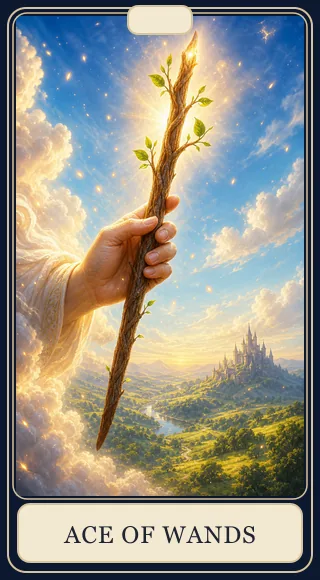
Ace of Wands
Creation, invention, enterprise, the powers which result in these; principle, beginning, source; birth, family, origin, and in a sense the virility which is behind them; the starting point of enterprises; according to another account, money, fortune, inheritance.
Fall, decadence, ruin, perdition, to perish also a certain clouded joy.
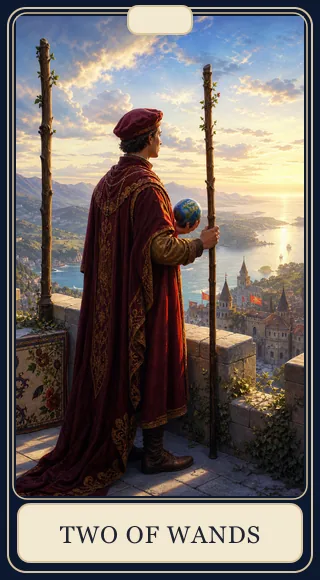
Two of Wands
Between the alternative readings there is no marriage possible; on the one hand, riches, fortune, magnificence; on the other, physical suffering, disease, chagrin, sadness, mortification. The design gives one suggestion; here is a lord overlooking his dominion and alternately contemplating a globe; it looks like the malady, the mortification, the sadness of Alexander amidst the grandeur of this world's wealth.
Surprise, wonder, enchantment, emotion, trouble, fear.
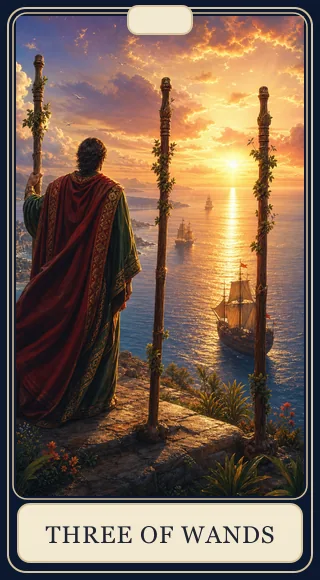
Three of Wands
He symbolizes established strength, enterprise, effort, trade, commerce, discovery; those are his ships, bearing his merchandise, which are sailing over the sea. The card also signifies able co-operation in business, as if the successful merchant prince were looking from his side towards yours with a view to help you.
The end of troubles, suspension or cessation of adversity, toil and disappointment.
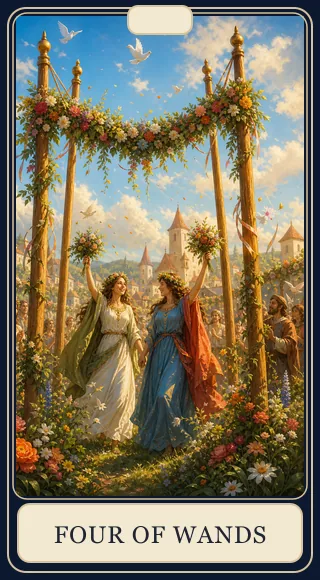
Four of Wands
They are for once almost on the surface--country life, haven of refuge, a species of domestic harvest-home, repose, concord, harmony, prosperity, peace, and the perfected work of these.
The meaning remains unaltered; it is prosperity, increase, felicity, beauty, embellishment.
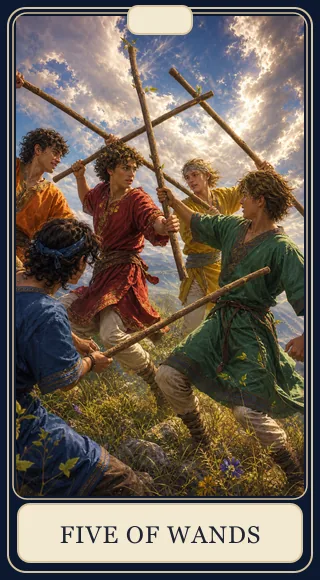
Five of Wands
Imitation, as, for example, sham fight, but also the strenuous competition and struggle of the search after riches and fortune. In this sense it connects with the battle of life. Hence some attributions say that it is a card of gold, gain, opulence.
Litigation, disputes, trickery, contradiction.
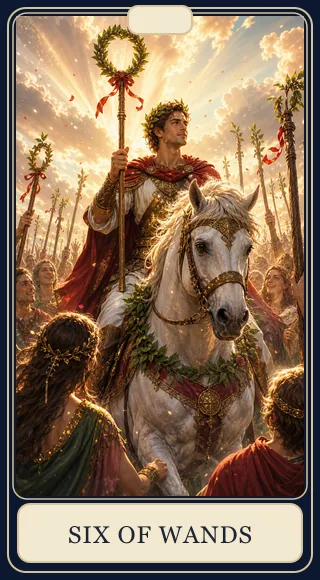
Six of Wands
The card has been so designed that it can cover several significations; on the surface, it is a victor triumphing, but it is also great news, such as might be carried in state by the King's courier; it is expectation crowned with its own desire, the crown of hope, and so forth.
Apprehension, fear, as of a victorious enemy at the gate; treachery, disloyalty, as of gates being opened to the enemy; also indefinite delay.
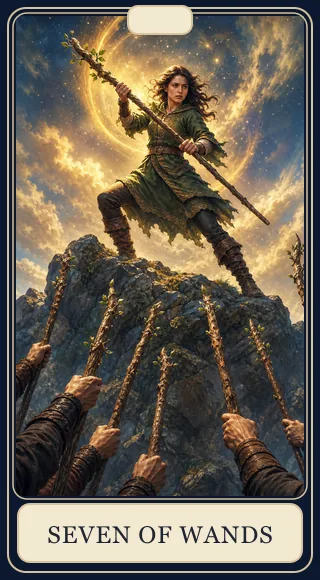
Seven of Wands
It is a card of valour, for, on the surface, six are attacking one, who has, however, the vantage position. On the intellectual plane, it signifies discussion, wordy strife; in business--negotiations, war of trade, barter, competition. It is further a card of success, for the combatant is on the top and his enemies may be unable to reach him.
Perplexity, embarrassments, anxiety. It is also a caution against indecision.
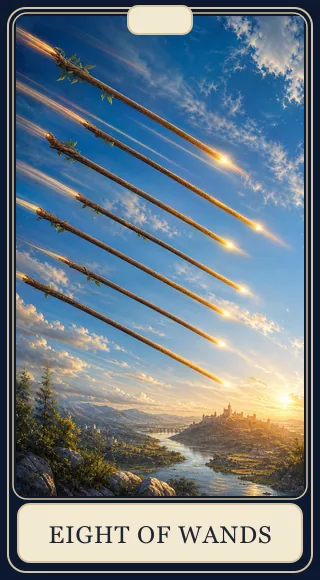
Eight of Wands
Activity in undertakings, the path of such activity, swiftness, as that of an express messenger; great haste, great hope, speed towards an end which promises assured felicity; generally, that which is on the move; also the arrows of love.
Arrows of jealousy, internal dispute, stingings of conscience, quarrels; and domestic disputes for persons who are married.
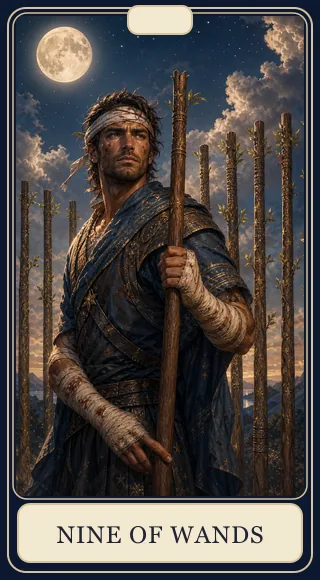
Nine of Wands
The card signifies strength in opposition. If attacked, the person will meet an onslaught boldly; and his build shews, that he may prove a formidable antagonist. With this main significance there are all its possible adjuncts--delay, suspension, adjournment.
Obstacles, adversity, calamity.
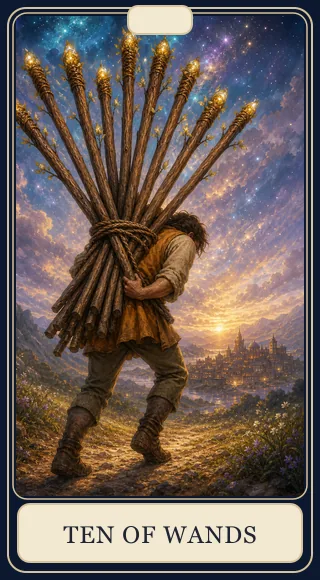
Ten of Wands
A card of many significances, and some of the readings cannot be harmonized. I set aside that which connects it with honour and good faith. The chief meaning is oppression simply, but it is also fortune, gain, any kind of success, and then it is the oppression of these things. It is also a card of false-seeming, disguise, perfidy. The place which the figure is approaching may suffer from the rods that he carries. Success is stultified if the Nine of Swords follows, and if it is a question of a lawsuit, there will be certain loss.
Contrarieties, difficulties, intrigues, and their analogies.
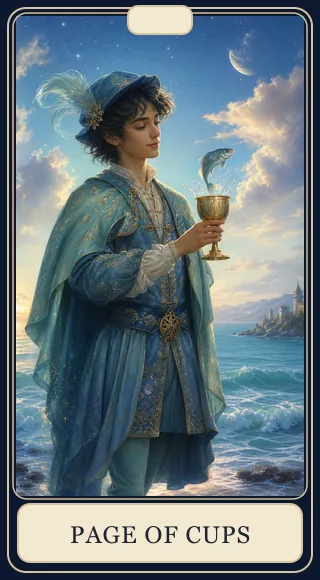
Page of Cups
Fair young man, one impelled to render service and with whom the Querent will be connected; a studious youth; news, message; application, reflection, meditation; also these things directed to business.
Taste, inclination, attachment, seduction, deception, artifice.
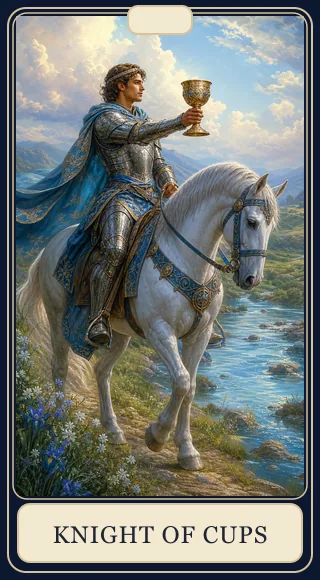
Knight of Cups
Arrival, approach--sometimes that of a messenger; advances, proposition, demeanour, invitation, incitement.
Trickery, artifice, subtlety, swindling, duplicity, fraud.
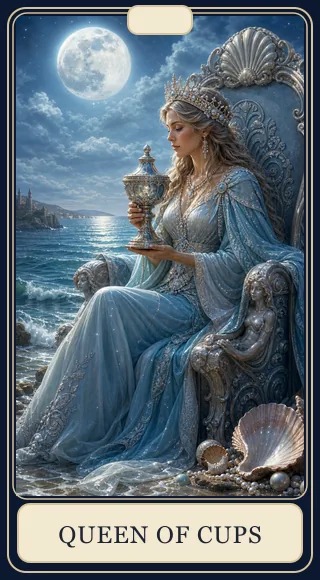
Queen of Cups
Good, fair woman; honest, devoted woman, who will do service to the Querent; loving intelligence, and hence the gift of vision; success, happiness, pleasure; also wisdom, virtue; a perfect spouse and a good mother.
The accounts vary; good woman; otherwise, distinguished woman but one not to be trusted; perverse woman; vice, dishonour, depravity.
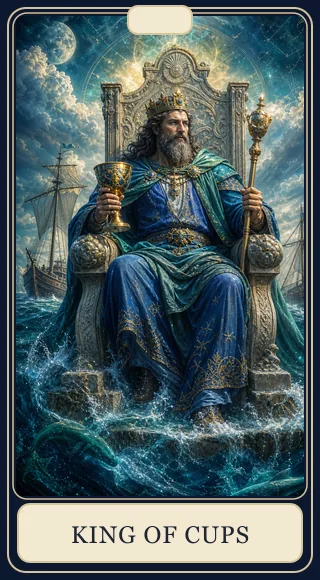
King of Cups
Fair man, man of business, law, or divinity; responsible, disposed to oblige the Querent; also equity, art and science, including those who profess science, law and art; creative intelligence.
Dishonest, double-dealing man; roguery, exaction, injustice, vice, scandal, pillage, considerable loss.
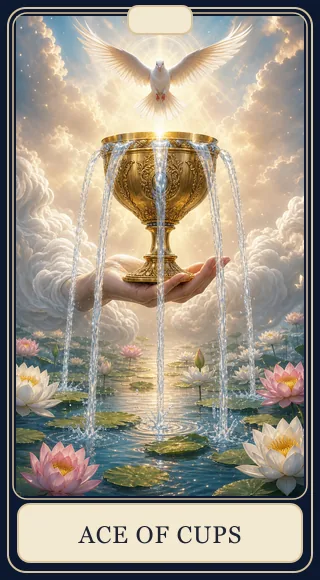
Ace of Cups
House of the true heart, joy, content, abode, nourishment, abundance, fertility; Holy Table, felicity hereof.
House of the false heart, mutation, instability, revolution.
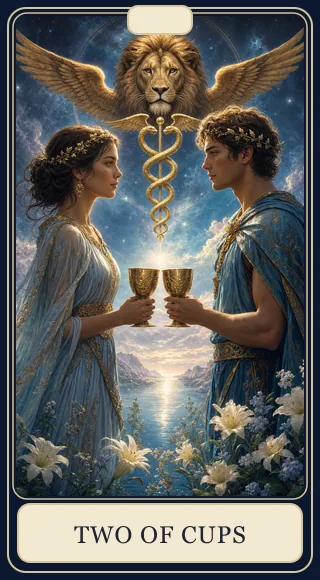
Two of Cups
Love, passion, friendship, affinity, union, concord, sympathy, the interrelation of the sexes, and--as a suggestion apart from all offices of divination--that desire which is not in Nature, but by which Nature is sanctified.
Lust, cupidity, jealousy, wish, desire, but the card may also give, says W., "that desire which is not in nature, but by which nature is sanctified."
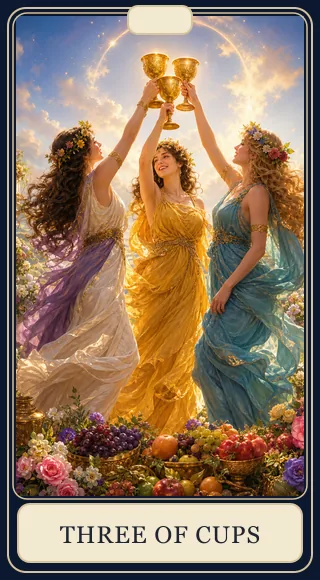
Three of Cups
The conclusion of any matter in plenty, perfection and merriment; happy issue, victory, fulfilment, solace, healing,
Expedition, dispatch, achievement, end. It signifies also the side of excess in physical enjoyment, and the pleasures of the senses.
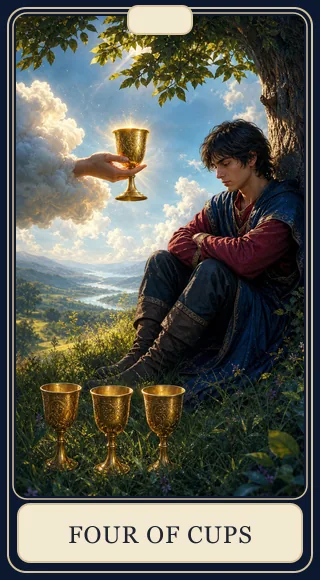
Four of Cups
Weariness, disgust, aversion, imaginary vexations, as if the wine of this world had caused satiety only; another wine, as if a fairy gift, is now offered the wastrel, but he sees no consolation therein. This is also a card of blended pleasure.
Novelty, presage, new instruction, new relations.
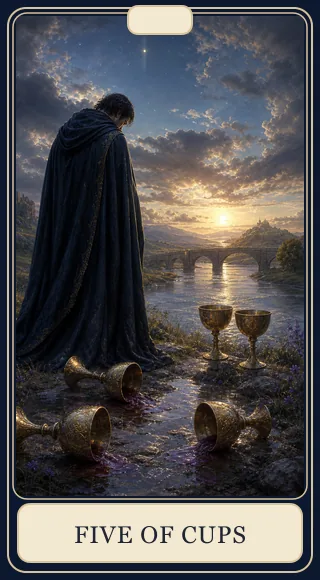
Five of Cups
A dark, cloaked figure, looking sideways at three prone cups two others stand upright behind him; a bridge is in the background, leading to a small keep or holding. Divanatory Meanings: It is a card of loss, but something remains over; three have been taken, but two are left; it is a card of inheritance, patrimony, transmission, but not corresponding to expectations; with some interpreters it is a card of marriage, but not without bitterness or frustration.
News, alliances, affinity, consanguinity, ancestry, return, false projects.
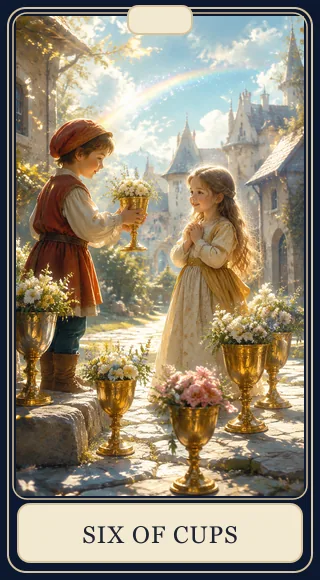
Six of Cups
A card of the past and of memories, looking back, as--for example--on childhood; happiness, enjoyment, but coming rather from the past; things that have vanished. Another reading reverses this, giving new relations, new knowledge, new environment, and then the children are disporting in an unfamiliar precinct.
The future, renewal, that which will come to pass presently.
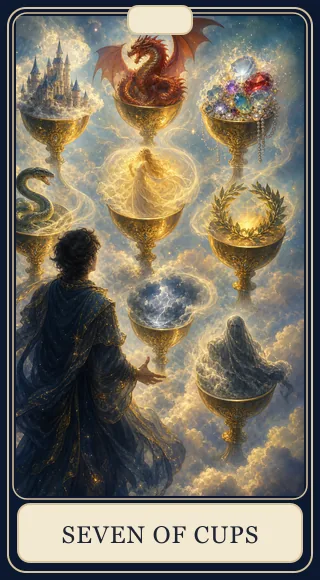
Seven of Cups
Fairy favours, images of reflection, sentiment, imagination, things seen in the glass of contemplation; some attainment in these degrees, but nothing permanent or substantial is suggested.
Desire, will, determination, project.
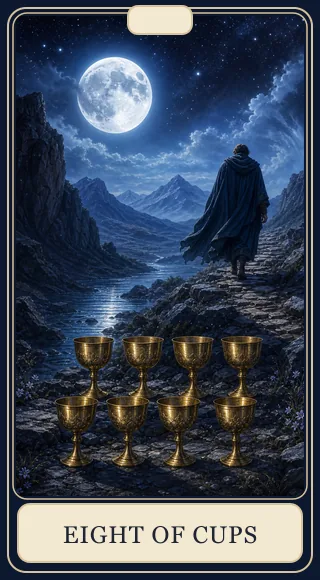
Eight of Cups
The card speaks for itself on the surface, but other readings are entirely antithetical--giving joy, mildness, timidity, honour, modesty. In practice, it is usually found that the card shews the decline of a matter, or that a matter which has been thought to be important is really of slight consequence--either for good or evil.
Great joy, happiness, feasting.
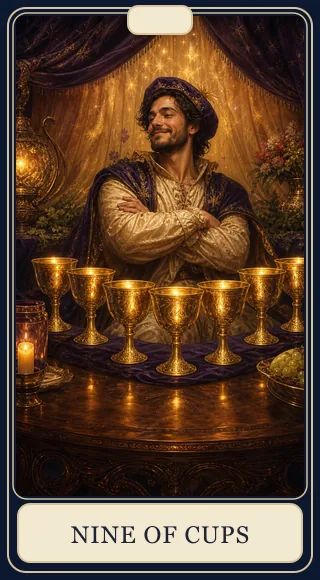
Nine of Cups
Concord, contentment, physical bien-être; also victory, success, advantage; satisfaction for the Querent or person for whom the consultation is made.
Truth, loyalty, liberty; but the readings vary and include mistakes, imperfections, etc.
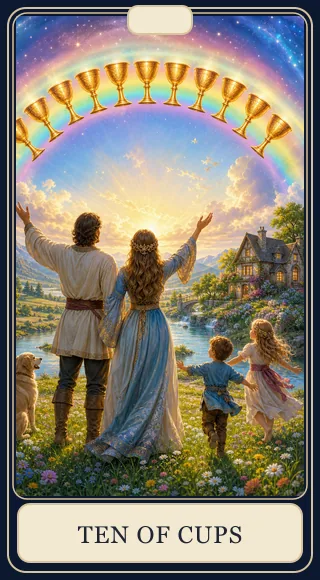
Ten of Cups
Contentment, repose of the entire heart; the perfection of that state; also perfection of human love and friendship; if with several picture-cards, a person who is taking charge of the Querent's interests; also the town, village or country inhabited by the Querent.
Repose of the false heart, indignation, violence.
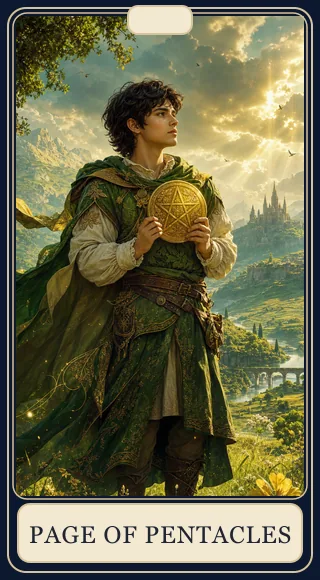
Page of Pentacles
Application, study, scholarship, reflection another reading says news, messages and the bringer thereof; also rule, management.
Prodigality, dissipation, liberality, luxury; unfavourable news.
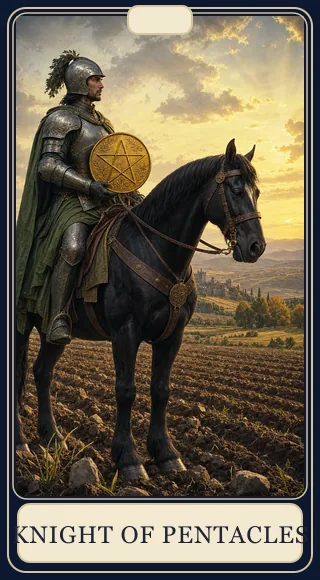
Knight of Pentacles
Utility, serviceableness, interest, responsibility, rectitude-all on the normal and external plane.
inertia, idleness, repose of that kind, stagnation; also placidity, discouragement, carelessness.
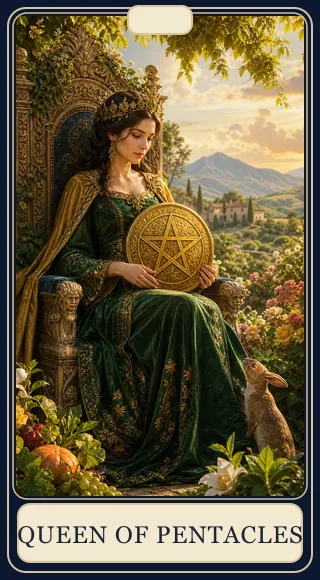
Queen of Pentacles
Opulence, generosity, magnificence, security, liberty.
Evil, suspicion, suspense, fear, mistrust.
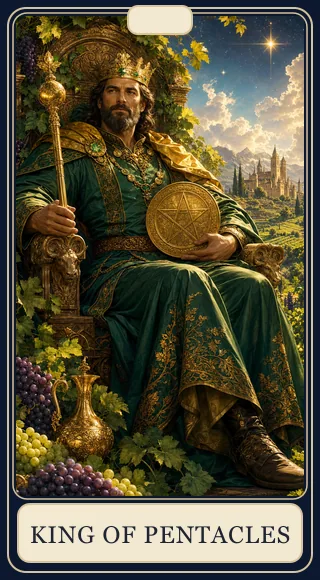
King of Pentacles
Valour, realizing intelligence, business and normal intellectual aptitude, sometimes mathematical gifts and attainments of this kind; success in these paths.
Vice, weakness, ugliness, perversity, corruption, peril.
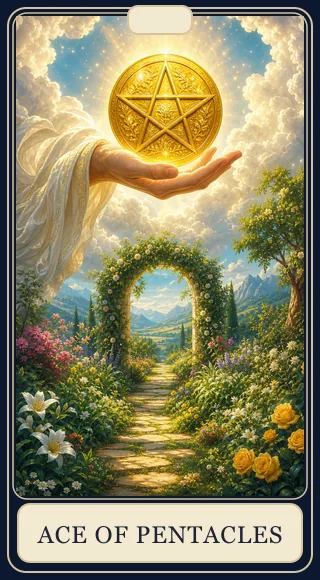
Ace of Pentacles
Perfect contentment, felicity, ecstasy; also speedy intelligence; gold.
The evil side of wealth, bad intelligence; also great riches. In any case it shews prosperity, comfortable material conditions, but whether these are of advantage to the possessor will depend on whether the card is reversed or not.
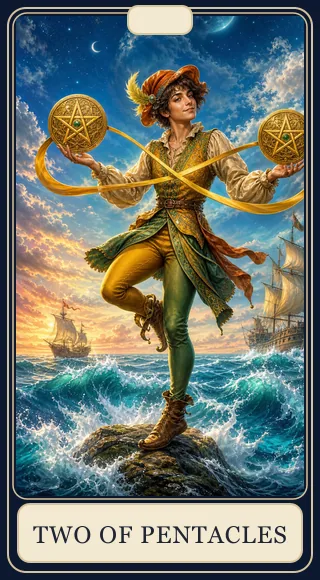
Two of Pentacles
On the one hand it is represented as a card of gaiety, recreation and its connexions, which is the subject of the design; but it is read also as news and messages in writing, as obstacles, agitation, trouble, embroilment.
Enforced gaiety, simulated enjoyment, literal sense, handwriting, composition, letters of exchange.
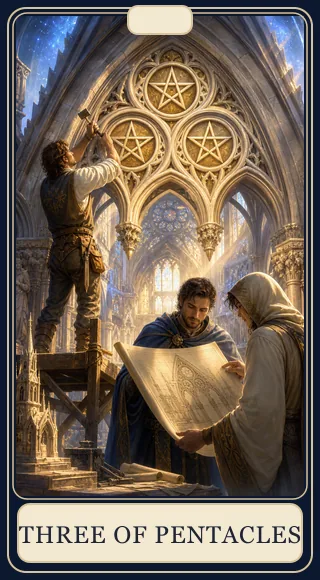
Three of Pentacles
Métier, trade, skilled labour; usually, however, regarded as a card of nobility, aristocracy, renown, glory.
Mediocrity, in work and otherwise, puerility, pettiness, weakness.
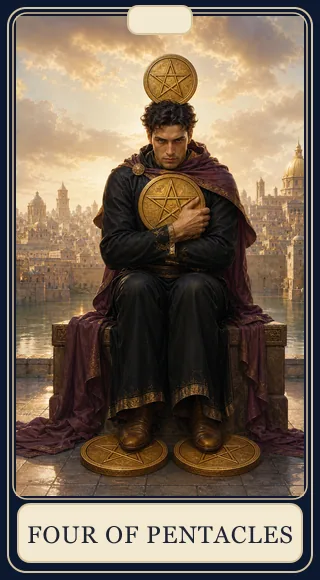
Four of Pentacles
The surety of possessions, cleaving to that which one has, gift, legacy, inheritance.
Suspense, delay, opposition.
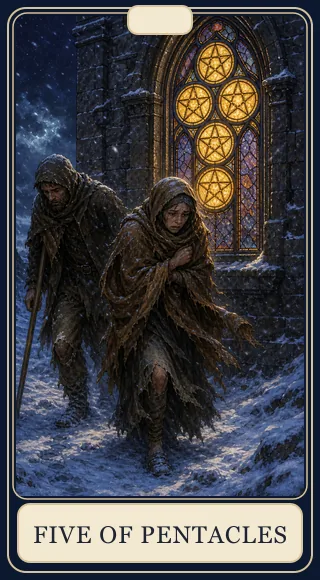
Five of Pentacles
The card foretells material trouble above all, whether in the form illustrated--that is, destitution--or otherwise. For some cartomancists, it is a card of love and lovers-wife, husband, friend, mistress; also concordance, affinities. These alternatives cannot be harmonized.
Disorder, chaos, ruin, discord, profligacy.
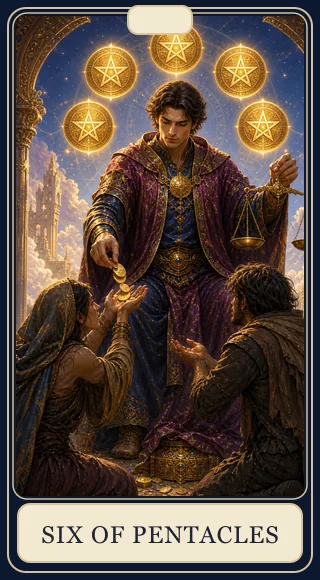
Six of Pentacles
Presents, gifts, gratification another account says attention, vigilance now is the accepted time, present prosperity, etc.
Desire, cupidity, envy, jealousy, illusion.
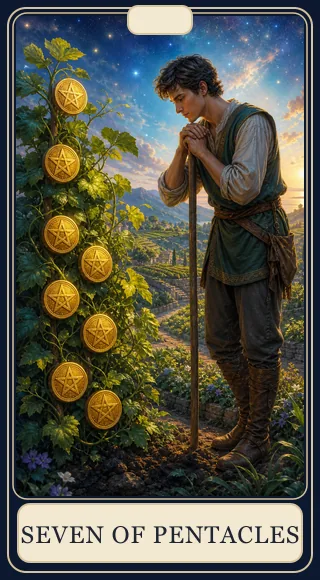
Seven of Pentacles
These are exceedingly contradictory; in the main, it is a card of money, business, barter; but one reading gives altercation, quarrels--and another innocence, ingenuity, purgation.
Cause for anxiety regarding money which it may be proposed to lend.
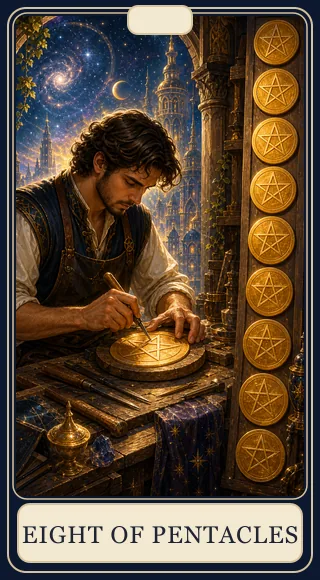
Eight of Pentacles
Work, employment, commission, craftsmanship, skill in craft and business, perhaps in the preparatory stage.
Voided ambition, vanity, cupidity, exaction, usury. It may also signify the possession of skill, in the sense of the ingenious mind turned to cunning and intrigue.
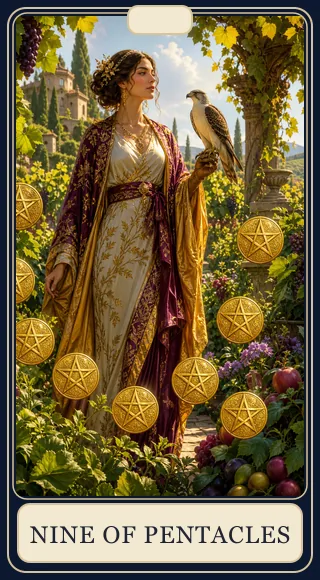
Nine of Pentacles
Prudence, safety, success, accomplishment, certitude, discernment.
Roguery, deception, voided project, bad faith.
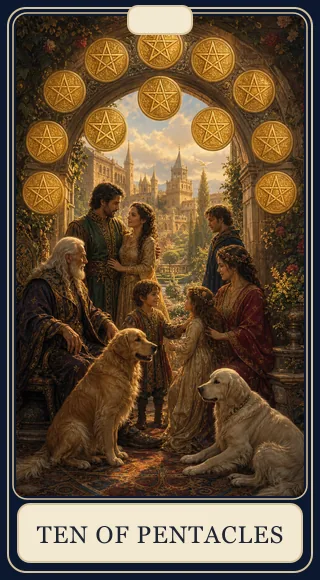
Ten of Pentacles
Gain, riches; family matters, archives, extraction, the abode of a family.
Chance, fatality, loss, robbery, games of hazard; sometimes gift, dowry, pension.
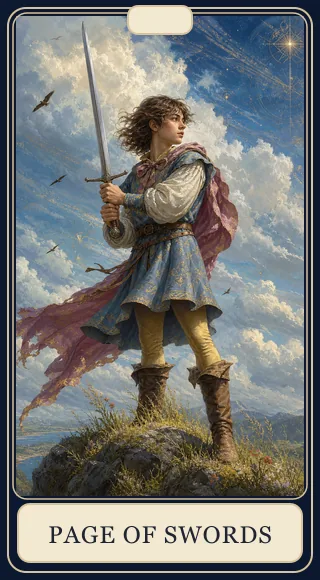
Page of Swords
Authority, overseeing, secret service, vigilance, spying, examination, and the qualities thereto belonging.
More evil side of these qualities; what is unforeseen, unprepared state; sickness is also intimated.
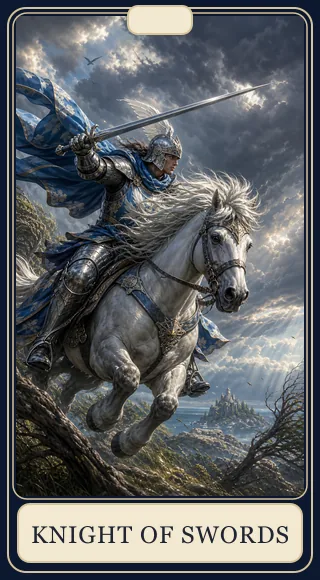
Knight of Swords
Skill, bravery, capacity, defence, address, enmity, wrath, war, destruction, opposition, resistance, ruin. There is therefore a sense in which the card signifies death, but it carries this meaning only in its proximity to other cards of fatality.
Imprudence, incapacity, extravagance.
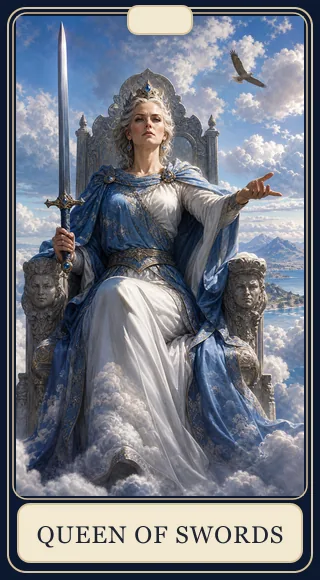
Queen of Swords
Widowhood, female sadness and embarrassment, absence, sterility, mourning, privation, separation.
Malice, bigotry, artifice, prudery, bale, deceit.
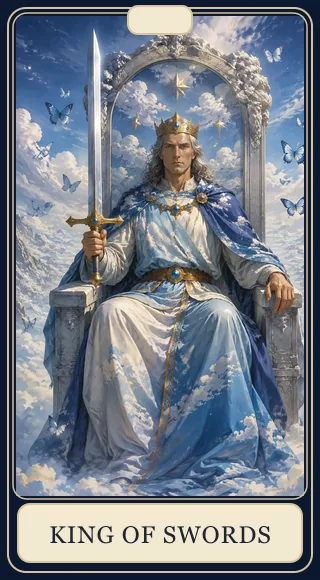
King of Swords
Whatsoever arises out of the idea of judgment and all its connexions-power, command, authority, militant intelligence, law, offices of the crown, and so forth.
Cruelty, perversity, barbarity, perfidy, evil intention.
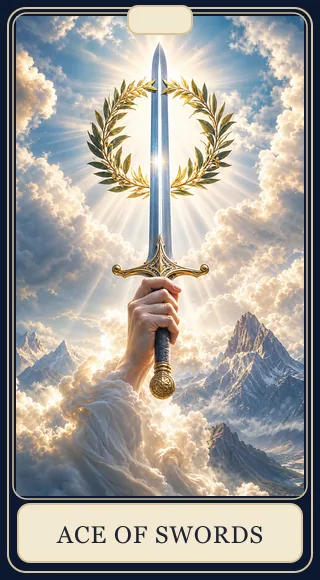
Ace of Swords
Triumph, the excessive degree in everything, conquest, triumph of force. It is a card of great force, in love as well as in hatred. The crown may carry a much higher significance than comes usually within the sphere of fortune-telling.
The same, but the results are disastrous; another account says--conception, childbirth, augmentation, multiplicity.
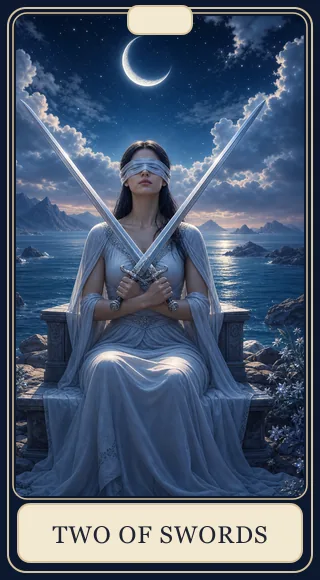
Two of Swords
Conformity and the equipoise which it suggests, courage, friendship, concord in a state of arms; another reading gives tenderness, affection, intimacy. The suggestion of harmony and other favourable readings must be considered in a qualified manner, as Swords generally are not symbolical of beneficent forces in human affairs.
Imposture, falsehood, duplicity, disloyalty.
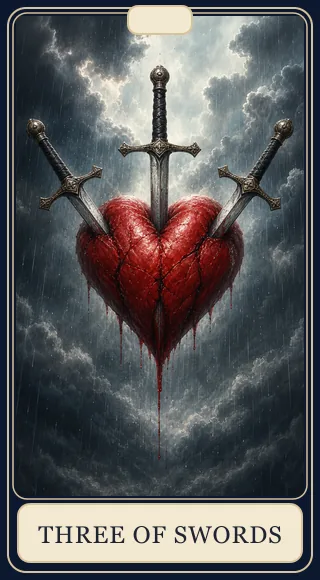
Three of Swords
Removal, absence, delay, division, rupture, dispersion, and all that the design signifies naturally, being too simple and obvious to call for specific enumeration.
Mental alienation, error, loss, distraction, disorder, confusion.
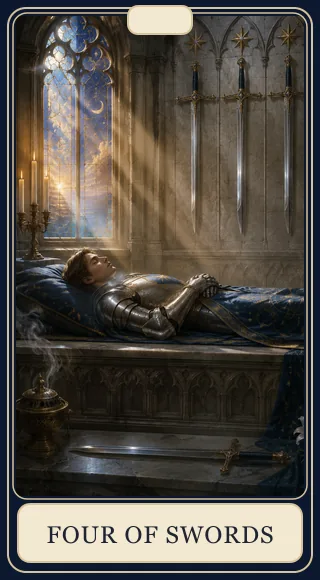
Four of Swords
Vigilance, retreat, solitude, hermit's repose, exile, tomb and coffin. It is these last that have suggested the design.
Wise administration, circumspection, economy, avarice, precaution, testament.
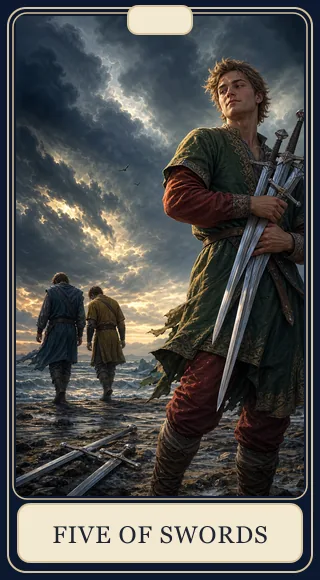
Five of Swords
Degradation, destruction, revocation, infamy, dishonour, loss, with the variants and analogues of these.
The same; burial and obsequies.
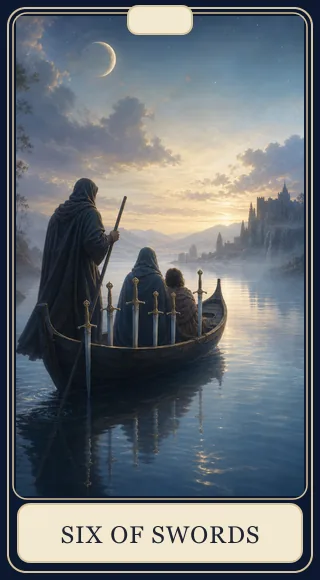
Six of Swords
Journey by water, route, way, envoy, commissionary, expedient.
Declaration, confession, publicity; one account says that it is a proposal of love.
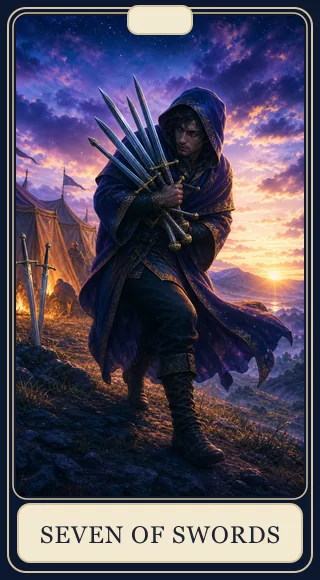
Seven of Swords
Design, attempt, wish, hope, confidence; also quarrelling, a plan that may fail, annoyance. The design is uncertain in its import, because the significations are widely at variance with each other.
Good advice, counsel, instruction, slander, babbling.
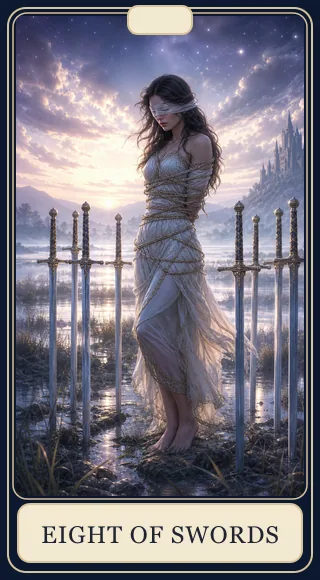
Eight of Swords
Bad news, violent chagrin, crisis, censure, power in trammels, conflict, calumny; also sickness.
Disquiet, difficulty, opposition, accident, treachery; what is unforeseen; fatality.
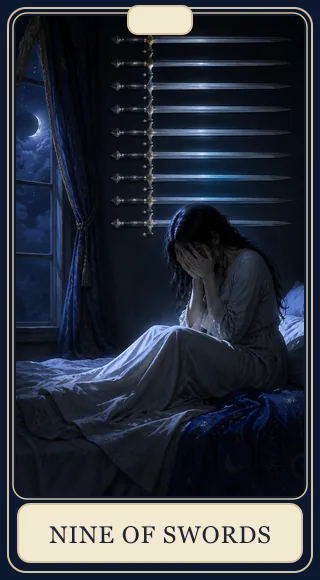
Nine of Swords
Death, failure, miscarriage, delay, deception, disappointment, despair.
Imprisonment, suspicion, doubt, reasonable fear, shame.
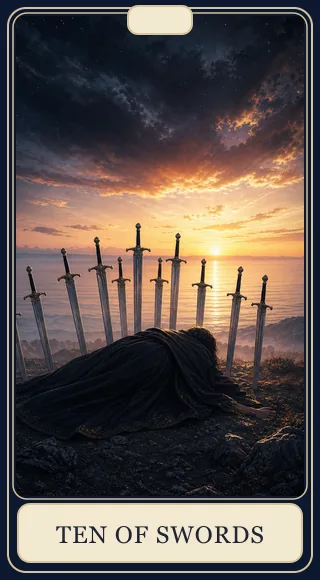
Ten of Swords
Whatsoever is intimated by the design; also pain, affliction, tears, sadness, desolation. It is not especially a card of violent death.
Advantage, profit, success, favour, but none of these are permanent; also power and authority.
Sources
Frequently asked questions
Does this page include every Tarot card?
Yes. It lists all 78 Tarot cards with images, upright meanings, and reversed meanings.
Are reversed meanings always the opposite of upright meanings?
No. Reversal can show blockage, internalization, excess, or adjustment, and the spread position still matters.
Can I interpret a question from one card meaning alone?
A single card meaning is a useful starting point, but fuller interpretation depends on the spread, question, and surrounding cards.
What is this page best for?
It is best for checking card images, names, and single-card meanings before you interpret your question further.
How should I use “Tarot Card Meanings with Images, Upright and Reversed”?
Use it as a focused Tarot learning and review guide: define the question object, time window, and real-world evidence before turning the method into one low-risk action and checkpoint.
Related guides
Continue exploring
Browse the 78 Tarot card images, names, upright meanings, and reversed meanings used by the system before opening a live Tarot spread.